Evernote has been the place to put things for a long time. Clip a web page, scan a receipt, save a PDF, and search for a word inside any of them years later. If your goal is to remember everything, it does that well.
Drift has a different goal. It is made for creative people with a lot of thoughts who want to do something with them. It catches an idea the moment it arrives, sorts it for you, and helps it grow into a project with tasks, writing and boards. All in one place, and simple on purpose.
The short answer
- Choose Evernote if you mostly save and search: web clippings, scans, PDFs and documents, on every platform including Windows, Android and the web.
- Choose Drift if you mostly have ideas, and want one calm place to catch them by voice and turn them into finished work.
- Use both if you like: keep your archive in Evernote, and let Drift be where new ideas land and get made.
An archive vs a workshop
Evernote is at its best as an archive. Notebooks, tags and strong search let you file almost anything and find it again. Over the years it has added tasks, a calendar and templates, and many people find it has become a lot to take in.
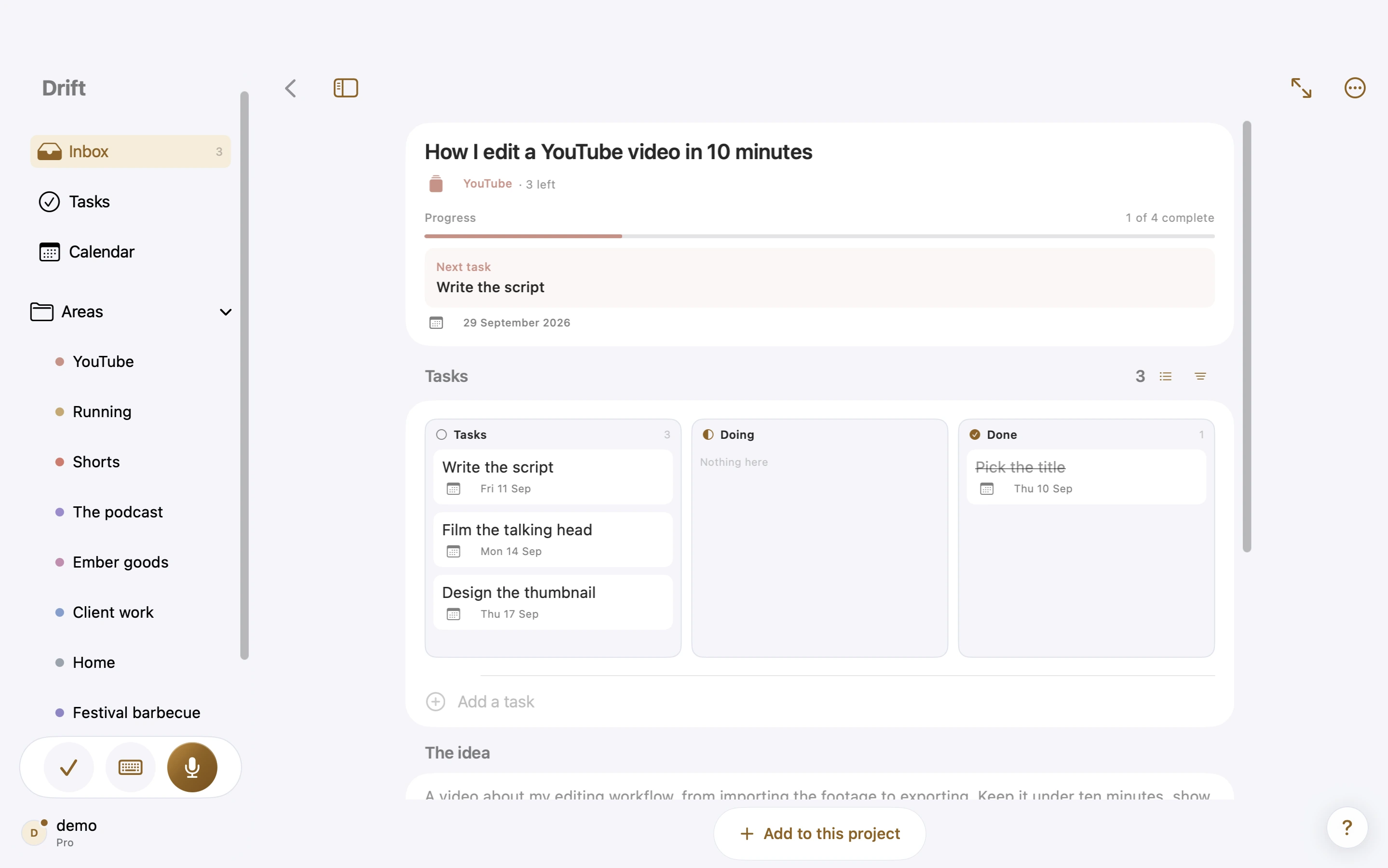
Drift is more like a workshop. Your ideas come in through one inbox, each with a title and a suggested area like YouTube, Work or Home. You go through them one card at a time. The good ones become projects, and a project holds what you need to make the thing: tasks with reminders, full-screen writing for scripts and outlines, a free-form board for images and notes, tables for shot lists or budgets, and a teleprompter for reading your script to camera.
Catching an idea
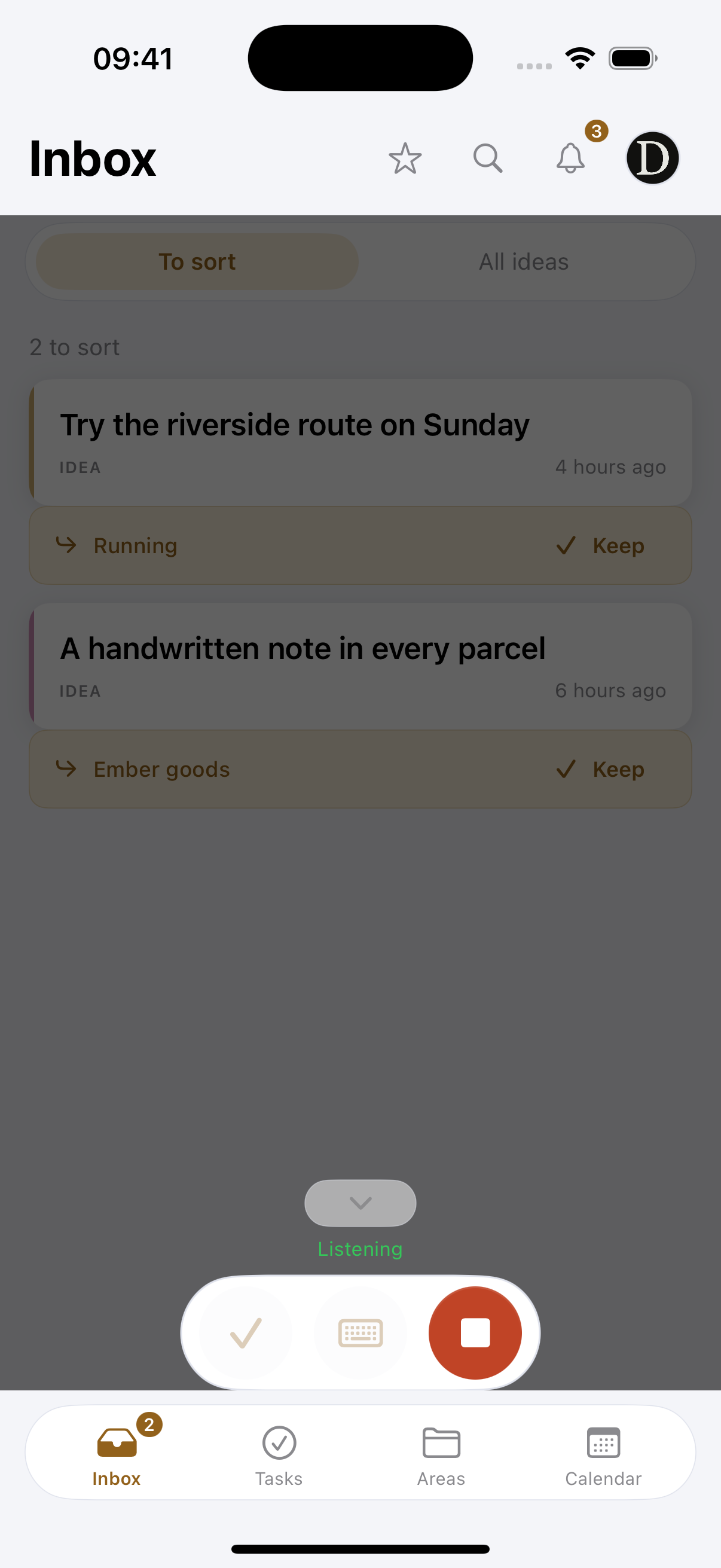
In Evernote you open a note and type, or record an audio clip you will have to listen back to later. In Drift you just talk: from the app, a widget, the Action Button, Apple Watch, or by saying "Hey Siri, catch my drift". Drift keeps listening through pauses, writes it down, cleans up the rambling, gives it a title, suggests where it belongs and pulls out any tasks. It works offline and syncs when you are back online.
Less to manage
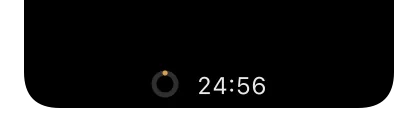
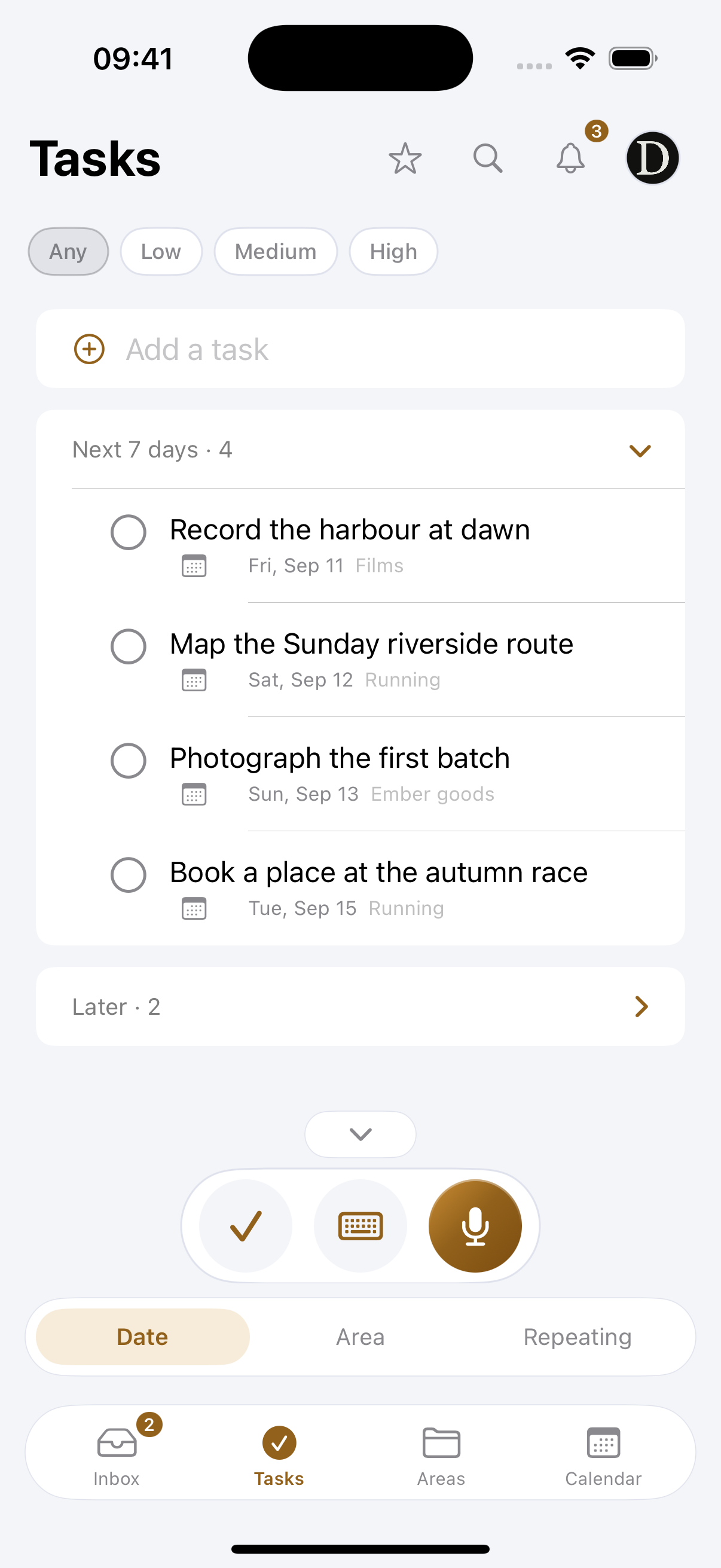
There are no notebooks to design and no tags to keep tidy in Drift. Today is split into Morning, Afternoon and Evening, you pick today's 3, and that is your day. Tasks sync with Apple Reminders, and timed tasks show up in Apple Calendar. On a Mac, Drift also lives at the notch, quietly showing your next task.
Where Evernote is the better pick
- You save a lot from the web and want a clipper that keeps whole pages.
- You scan documents and want to search the text inside images and PDFs.
- You need Windows, Android or the web today. Drift is on iPhone, iPad and Mac, with capture on Apple Watch.
- You have years of notes there and mostly need to find them again.
Price
Evernote has a free plan that has become quite limited over the years, and paid plans for most of what people use it for. Drift has a small free plan and one Pro subscription that covers iPhone, iPad and Mac. Sometimes less is more.
Drift at a glance
- iPhone, iPad and Mac, with capture on Apple Watch. Android, Windows and the web are planned for later.
- The app comes in 10 languages, and you choose the language you speak in separately: read Drift in Dutch and talk in English, or the other way round.
- Capturing works offline, on a plane or without signal, and syncs when you are back online.
- Search across everything you have caught, and add images to your projects and boards.
- Tasks sync with Apple Reminders both ways: tick a reminder and the task is done, add one to a Drift list and it becomes a task. Timed tasks go to Apple Calendar, and your calendar events show in Drift.
- Export your writing as Markdown, and tables as PDF or CSV.
- Share an area with someone, view-only or with editing, as part of Pro.
- Your account and ideas are stored in the EU, in Ireland.
- Pro starts with a 14-day free trial.
Full transparency
Drift is built and maintained by one person: Sjoerd, a filmmaker in Haarlem. The parts that make Drift feel easy, turning your voice into clean text, giving every idea a title and suggesting where it belongs, run on paid servers, so every capture costs real money. That is why Drift cannot be free forever.
There is a free plan so you can try it properly, but it is limited on purpose: 10 captures a week and up to 6 areas. Pro is €4.99 a month, or €47.90 a year, which works out at €3.99 a month. Pro starts with a 14-day free trial, so you can try everything before you pay. Low enough to be easy, and enough to keep Drift going and getting better.
And one promise that costs nothing: your ideas and writing are never used to train models.
Drift is on the App Store for iPhone, iPad and Mac, with capture on Apple Watch. Start with the free plan and see if it fits the way you think.